
 See My Latest Article on HelloNation
Choosing between a natural swimming pool and a traditional pool involves more than comparing appearances. The two systems differ in water treatment, construction, maintenance, energy use, landscaping, and how they fit into a residential property.
For households in Alpharetta, GA, seasonal heat, heavy summer rainfall, tree cover, clay-influenced soils, and occasional winter freezes all affect how either pool type performs. The right choice depends on whether the priority is a natural landscape feature, predictable swimming conditions, lower visual impact, or familiar day-to-day operation.
What is the difference between a natural pool and a traditional pool?
A natural pool uses biological filtration and planted areas to help clean and balance the water. A traditional pool normally relies on mechanical circulation, manufactured filtration, and chemical sanitation.
Natural pools are often designed with two connected zones:
- A swimming area for recreation
- A regeneration or planted area containing gravel, aquatic plants, and biological filtration media
Water circulates between these zones. Beneficial microorganisms and plant systems help remove certain impurities, while pumps maintain movement through the filtration area.
Traditional pools use equipment such as:
- A circulation pump
- A filter
- A sanitizer, commonly chlorine
- Water-balancing chemicals
- Skimmers, drains, and return lines
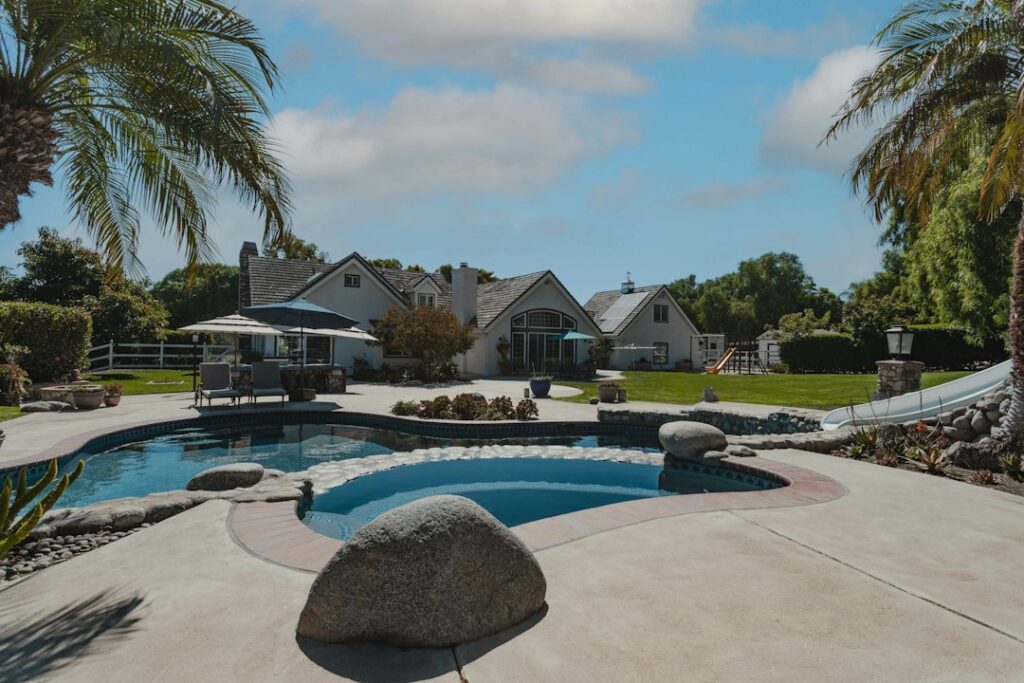
A traditional pool may have concrete, fiberglass, or vinyl construction. A natural pool may resemble a landscaped pond, although some designs look quite structured and pool-like.
Saltwater pools are still generally considered traditional pools. They use a salt chlorine generator to produce chlorine, so they do not provide the same biological filtration approach as a natural swimming pool.
Which type looks better in a residential landscape?
Natural pools usually blend more closely with gardens, stonework, native planting, and informal outdoor spaces. Their edges may include rocks, shallow shelves, aquatic plants, or gently sloped transitions. This can make the water feature feel like part of the landscape rather than a separate recreation structure.
Traditional pools offer more control over visual design. They can be built with geometric lines, uniform coping, raised walls, steps, tanning ledges, and clearly defined decks. This appearance often works well with formal outdoor rooms and newer residential construction.
The visual difference is also a maintenance consideration. A natural pool is expected to look alive and somewhat seasonal. Leaves, plant growth, sediment, and changing water color may be part of its character. A traditional pool is usually managed to look clear, consistent, and highly controlled.
How does maintenance compare?
Neither system is maintenance-free. The work is simply different.
Traditional pool maintenance is more routine and measurable. It commonly includes checking sanitizer and pH levels, emptying skimmer baskets, cleaning the filter, brushing surfaces, removing debris, and adjusting water levels. Equipment may also require seasonal inspection and winter preparation.
Natural pool maintenance includes many of those tasks, especially debris removal and circulation checks, but adds ecological management. Common responsibilities include:
- Trimming or thinning aquatic plants
- Removing excess organic matter
- Managing algae and sediment
- Inspecting pumps and biological filter zones
- Preventing leaves from accumulating in shallow areas
- Monitoring whether plants are becoming overgrown
In a wooded or heavily landscaped yard, fallen leaves can affect both systems. Natural pools may require more attention to decomposing plant material because organic matter can alter water clarity and nutrient levels. Traditional pools may become stained or chemically imbalanced when debris remains in the water.
Which pool has clearer and more predictable water?
Traditional pools generally provide more predictable clarity because the sanitation process is designed for rapid chemical control. Water testing can show whether sanitizer, pH, alkalinity, and calcium hardness are within the desired range.
Natural pools may have clear water, but their appearance can vary more with weather, plant growth, sunlight, nutrient levels, and circulation. A natural pool that is properly designed and maintained should not be assumed to look exactly like a conventional pool every day.
This distinction matters after heavy summer storms. Rain can introduce soil, pollen, leaves, and other organic material into the system. In a natural pool, those materials interact with the biological balance of the regeneration zone. In a traditional pool, they may create a more immediate need for testing and chemical adjustment.
Cloudy water, persistent algae, unusual odors, or rapid changes in water quality should not be treated as normal simply because a pool is natural. These conditions may indicate inadequate circulation, excess nutrients, filtration problems, or sanitation concerns.
Which option is better for Alpharetta’s climate?
The local climate creates practical demands for both types. Warm, humid summers encourage plant growth and can increase algae pressure. Spring pollen and autumn leaves add organic material. Heavy rainfall can raise water levels and carry sediment into the pool area. Winter freezes require protection for pumps, plumbing, filters, and exposed surfaces.
A natural pool needs enough sunlight, circulation, and space for its biological zones to function. Excessive shade can reduce plant performance, while nearby trees can increase leaf accumulation and root-related design concerns.
Traditional pools are often easier to cover and winterize in a standardized way. However, they still require attention to freezing temperatures, water chemistry, equipment drainage, and cover safety.
Drainage is particularly important on sloped or clay-influenced properties. Water moving toward the pool can carry soil and landscape debris. Poor grading may create problems regardless of which pool system is selected.

Does a natural pool require more space?
Usually, yes. A natural pool needs room for both swimming and biological treatment. The regeneration zone may occupy a substantial part of the overall footprint, although compact designs can reduce the planted area through specialized filtration methods.
Traditional pools can fit into tighter spaces because the filtration equipment is concentrated in a mechanical system. Setback requirements, easements, fencing, deck space, drainage, and access for construction still affect the usable design.
For smaller residential lots, the practical comparison is not just pool size. It is the total space required for swimming, filtration, safe circulation around the water, landscaping, equipment, and maintenance access.
Which costs less to build and operate?
There is no universal lower-cost option. Natural pools may require more excavation, waterproofing, planting, grading, stonework, and specialized biological design. Traditional pools may involve substantial costs for excavation, structural construction, plumbing, electrical work, equipment, decking, fencing, and water treatment.
Operating expenses also differ. Traditional pools generally use chemicals and mechanical equipment on a regular schedule. Natural pools may use fewer manufactured chemicals but still consume electricity for pumps and require planting, cleaning, and ecological maintenance.
Long-term cost is affected by:
- Pool size and depth
- Soil and drainage conditions
- Amount of decking and hardscape
- Pump efficiency
- Cover use
- Tree cover and debris
- Repair access
- Winterization needs
- The complexity of the filtration system
A lower chemical bill does not automatically mean a lower total cost. A lower-maintenance appearance also cannot be assumed without considering the planted areas and water-management work.
Are natural pools safe for children and pets?
Safety depends on design and supervision, not simply on whether the pool is natural or traditional. Both types require secure access control, appropriate fencing, slip-resistant surfaces, safe depths, and clear rules for children.
Natural pools may include shallow planted zones, rocks, uneven edges, or areas that are difficult to see through the water. These features can create additional supervision concerns. Traditional pools may have clearer boundaries, but diving areas, drains, steps, and slippery surfaces still require attention.
Pets can introduce hair, dirt, nutrients, and microorganisms into either system. Pet access should be considered during design, particularly if the water is connected to planted or wildlife-supporting areas.
How should a homeowner choose?
A natural pool may be a better fit for someone who wants the water feature to function as part of a broader landscape and accepts seasonal variation, plant management, and a larger footprint.
A traditional pool may be more practical for someone who values consistent water clarity, compact mechanical filtration, familiar testing routines, and a clearly defined swimming area.
Before deciding, compare the total site plan rather than the pool basin alone. Consider drainage after storms, winter protection, tree debris, equipment placement, fence locations, landscape maintenance, available space, and how the pool will be used during the hottest months.
Local building, electrical, fencing, drainage, and stormwater requirements may apply to either design. Those requirements should be confirmed before construction plans are finalized, especially when excavation or water movement could affect neighboring property or existing site drainage.