
 See My Latest Article on HelloNation
Which plants grow best around pools in Alpharetta, GA?
The best poolside plants are tidy, adaptable, and unlikely to create heavy leaf, flower, fruit, or seed litter. They should also tolerate the heat reflected from paving, occasional splashing, periods of dry soil, and the humid growing season common in the area.
Good choices for many residential pool landscapes include:
- Dwarf yaupon holly
- ‘Gem Box’ or other compact inkberry holly selections
- Dwarf palmetto in suitable protected locations
- Muhly grass
- Liriope and mondo grass
- Cast iron plant for shaded areas
- Native sedges
- Coneflower and black-eyed Susan in beds set away from the water
- Rosemary, lavender, or other container-grown herbs in sunny locations
No plant is completely unaffected by concentrated chlorine or salt. Even tolerant plants can develop brown leaf edges if pool water repeatedly lands on their foliage or saturates the root zone.
What should be considered before choosing a plant?
Poolside planting is less about finding a single “perfect” species and more about matching each plant to the conditions around the pool. A sunny deck, a shaded fence line, and a damp drainage area may require entirely different selections.
Evaluate:
- Sun exposure: Pool decks often reflect additional heat and light, while areas beneath trees or near privacy fences may receive only part-day sun.
- Mature size: A plant that fits beside the pool when purchased may eventually block walkways, shade equipment, or grow over the water.
- Litter: Leaves, petals, berries, seed pods, and peeling bark can increase skimming and filter cleaning.
- Root behavior: Avoid large, aggressive, or surface-rooted plants immediately beside the pool shell, deck, plumbing, or retaining walls.
- Water movement: Compacted soil, roof runoff, and irrigation overspray can leave some areas wet while nearby soil remains dry.
- Cold exposure: Winter temperatures can occasionally damage plants that perform well during summer but are not reliably hardy in the local climate.
Plant labels should be checked for mature height, spread, light requirements, and cold hardiness rather than relying only on the size of the container.
Which low-litter shrubs work well near a pool?
Compact evergreen shrubs are useful for adding structure and privacy without creating a constant cleanup problem. Dwarf yaupon holly is one practical option for sunny areas. It tolerates heat, handles pruning, and generally keeps a neat form. Female plants can produce berries, so a berry-free selection or male plant may be preferable beside the pool deck.
Inkberry holly can provide an evergreen appearance with a softer outline than many spiky-leaved plants. It is most successful where the soil does not dry out completely. Dwarf cultivars are more appropriate than full-size forms for narrow planting beds.
Some compact evergreen shrubs may be suitable farther from the pool, but plants with brittle branches, heavy fruit, or frequent leaf drop are usually less convenient directly beside the water. Large shade trees can be valuable elsewhere in the yard, but planting them close to the pool often creates long-term maintenance and root-management concerns.
Are ornamental grasses good poolside plants?
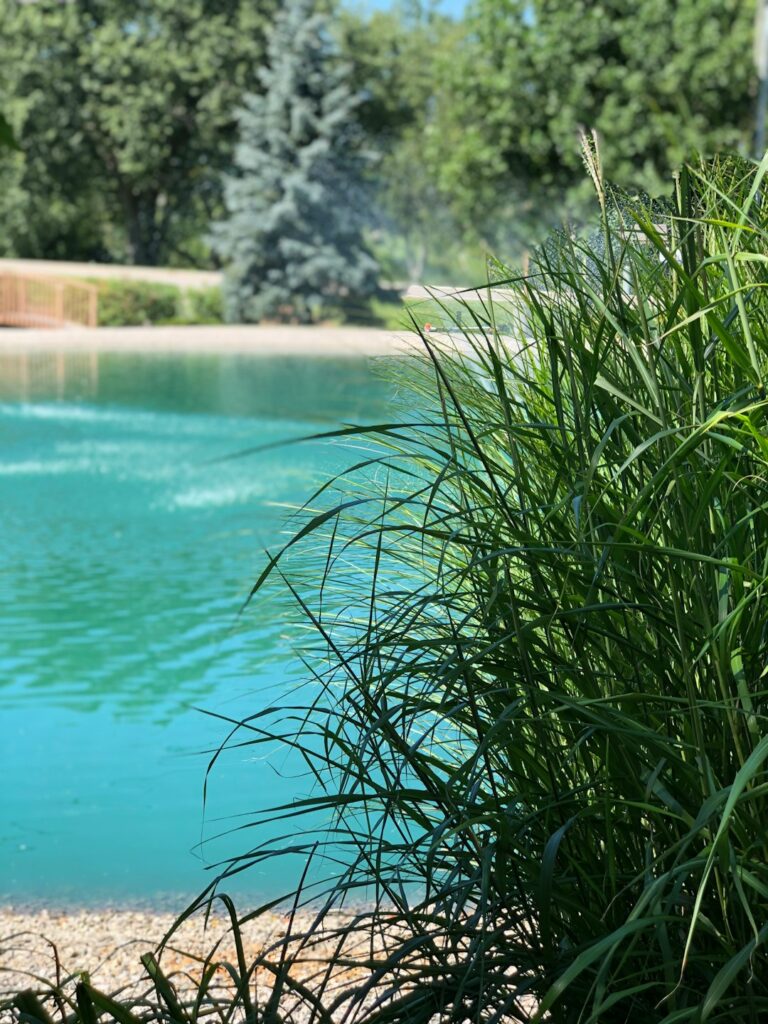
Several ornamental grasses work well because they add movement and texture without forming dense, woody root systems. Muhly grass is especially attractive in sunny beds, where its fine foliage and seasonal flower plumes create a soft screen. It generally performs best in well-drained soil and should not be placed where irrigation keeps the roots constantly wet.
Liriope, mondo grass, and native sedges are useful for edging or filling spaces beneath shrubs. They are generally easier to maintain than turf in narrow strips beside hardscaping. Mondo grass is often better suited to partial shade, while liriope can handle a broader range of conditions.
Keep grasses far enough from the coping and walking surfaces that mature foliage does not obstruct footing. Cut back dormant foliage at the appropriate time of year rather than allowing dead material to fall into the pool throughout the swimming season.
What plants are best for sunny pool decks?
Sunny areas with reflective paving can become hotter and drier than the rest of the landscape. Select plants that tolerate heat and allow the soil to drain after heavy summer rain.
For sunny beds or containers, consider:
- Rosemary
- Lavender where drainage is excellent
- Coneflower
- Black-eyed Susan
- Coreopsis
- Ornamental grasses
- Compact hollies
- Drought-tolerant native perennials
Herbs and flowering perennials can attract bees and other pollinators. That is beneficial for the garden, but flowering plants should be placed away from the main entry points, steps, and lounging areas if stinging insects would be a concern.
Plants with sharp spines, stiff blades, or irritating sap should not be positioned beside narrow walkways or places where swimmers frequently enter and exit the pool.
What grows well in shaded areas near pools?
Shade often occurs along privacy fences, beneath existing trees, or on the side of the house. Cast iron plant is a durable choice for deep shade and can provide broad green foliage with relatively little fuss. Mondo grass, liriope, and selected native sedges can also work in partial shade.
Moist shade is different from dry shade. Soil beneath established trees may be dry because tree roots compete for water, while low areas may remain wet after storms. Choose plants based on the actual soil conditions rather than assuming every shaded area has the same moisture level.
Avoid increasing irrigation simply because a plant looks wilted during hot weather. Check the soil first. Excess water can encourage root problems and may move nutrients away from the root zone.
Can saltwater pool systems damage plants?
Saltwater pools still contain salt, and repeated splash or backwash can affect sensitive plants. Salt may cause scorched leaf margins, poor growth, and gradual soil damage when it accumulates.
Poolside plants should not be selected solely because they are described as “salt tolerant.” The amount of exposure matters. A plant several feet from the pool may perform well, while the same plant directly beside a splash zone may decline.
Helpful practices include:

- Direct splash away from planted beds when possible.
- Rinse foliage with clean water if salt or chemical residue accumulates.
- Use drip irrigation instead of frequent overhead spraying.
- Keep backwash and drainage from flowing repeatedly into the same planting area.
- Improve drainage so salts are less likely to remain concentrated around roots.
- Replace highly sensitive plants in areas that receive regular splash.
Chlorine and salt are not substitutes for proper plant selection, drainage, or irrigation management.
How far should plants be from the pool?
The correct distance depends on mature size, root behavior, maintenance needs, and the layout of the deck. Low ground covers and compact grasses can often be planted closer than shrubs or trees, provided they do not spread onto walking surfaces.
Leave enough room for:
- Safe passage around the pool
- Pruning and irrigation access
- Cleaning behind shrubs
- Future plant growth
- Inspection of pool equipment and drainage
- Keeping mulch and soil away from the waterline
A narrow bed filled with mature-sized plants is usually easier to maintain than a crowded bed planted with too many small specimens. Spacing may look sparse at first, but plants generally fill in as roots become established.
Which plants should generally be avoided beside the water?
Avoid placing messy or difficult-to-control plants immediately beside the pool. Common problems include:
- Large deciduous trees that drop leaves for several weeks
- Fruit-producing trees and shrubs
- Plants with heavy seed heads or sticky flowers
- Aggressive vines
- Thorny shrubs beside walkways
- Bamboo or other spreading plants
- Species with brittle branches
- Plants that require constantly wet soil
- Invasive or poorly contained ground covers
A few plants with seasonal litter may still be appropriate farther from the pool, especially when they provide useful shade or privacy. The key is to create a transition zone between higher-maintenance planting and the water.
Is container planting a good option?
Containers provide flexibility and are often useful around existing pools where digging is limited. They allow tropical-looking annuals, tender plants, and herbs to be moved or protected during cold weather.
Choose heavy, stable containers that will not tip easily and place them where drainage water will not stain paving or flow into the pool. Containers dry faster than in-ground beds, especially on hot decks, so they require closer monitoring.
For a practical poolside design, combine a few evergreen shrubs for structure, low grasses or ground covers for texture, and a limited number of seasonal containers for color. That approach keeps the landscape attractive while reducing the amount of plant material that ends up in the pool.